Research
Practice-led research in hybrid arts, situated at the intersection of speculative museology, object-oriented ontology, and the archival implications of sustained attention. Based at the Department of Audio & Visual Arts, Ionian University, Corfu.
The 8 Museum: Speculative Museology, Embodied Attention, and a Counter-Archive of Late-Stage Humanity
The 8 Museum is an ongoing, practice-led research project built around a deceptively simple act: photographing the numeral 8 wherever it appears in the world. Found on street signs and packaging, scratched into walls, printed on fading stickers, embedded in rust and peeling paint — these 8s are not sought with the efficiency of a database. They are encountered through walking, travelling, and sustained attention to the ordinary. Across several years and dozens of countries, this practice has produced an archive of more than eight thousand images, each one a small record of human-scale noticing in a world increasingly dominated by automated seeing.
The thesis situates this practice within intersecting fields: speculative museology, object-oriented ontology, media archaeology, and queer temporality. It asks what happens when a single recurring form — a digit, a glyph, a loop — becomes the organising principle of an entire museological practice. The archive that accumulates is not a database optimised for retrieval but a durational gesture: a fossil record of what it felt like to look closely at the ordinary in the early decades of the twenty-first century.
The core contribution of the thesis is the development of two new conceptual terms. Ontological discomfort names the felt gap between a philosophical commitment (all objects are equally real) and a lived response (this object matters more) — not a failure of understanding but a diagnostic instrument, marking where a framework's limits are experiential rather than logical. Affective gravity names the force that pulls certain objects out of ontological flatness and into the register of care — the mechanism by which hierarchy reappears in ostensibly flat systems. These concepts emerge from the sustained encounter between object-oriented ontology and what curatorial practice actually reveals: that theory, however elegant, does not survive contact with the weight of a found thing.
The thesis frames The 8 Museum as a counter-practice: a deliberate inversion of the speed, scale, and extractive logic that characterise both digital culture and the AI image generation systems with which this practice began — and from which it turned away. Each photograph is an act of noticing. The archive, taken as a whole, is evidence: of a way of looking, of a period of time, of a species that sought meaning slowly, at the edge of its own obsolescence.
- Chapter 1Living Inside a Pattern — The Hyperobject of 8-ness
- Chapter 2The Disease of the Archive — Collecting, Hoarding, and the Cabinet of 8s
- Chapter 3Hachidō — Method, Pilgrimage, Performance
- Chapter 4Objects That Withdraw — OOO, Vibrant Matter, and the Limits of Flat Ontology
- Chapter 5A Snapshot of Late-Stage Humanity
- CreativeFour outputs: the digital archive at 8museum.com, Still Warm, BerryPong & the satirical northern field notes
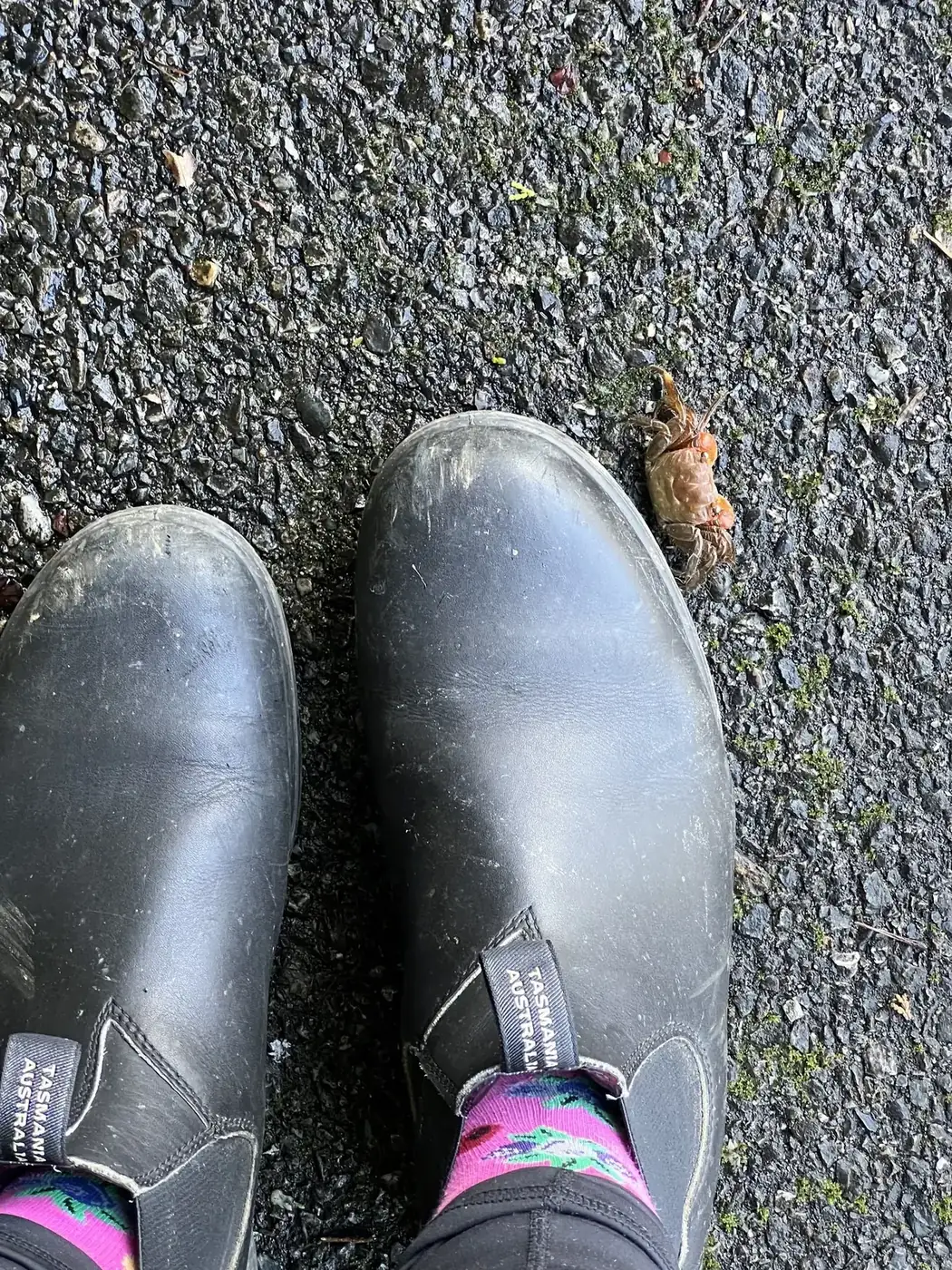
Still Warm: Ontological Discomfort, Curatorial Affect, and the Limits of Flat Ontology in Contemporary Artistic Practice
This paper examines Still Warm, a practice-based artistic research project that stages a cabinet of curiosities composed of found animal remains and their digitally preserved traces. Emerging from The 8 Museum, the project marks a decisive shift: from pattern recognition toward mortality, from semiotic play toward ethical and affective gravity.
Through this shift, Still Warm becomes a site for interrogating Object Oriented Ontology (OOO) — the philosophical framework proposing a radically flattened ontology in which all objects exist equally. The paper introduces two concepts: ontological discomfort, the unsettled feeling that arises when curatorial care makes claims that flat ontology cannot accommodate; and affective gravity, the observable hierarchies of care that emerge in practice despite theoretical commitments to ontological flatness.
Drawing on feminist care ethics, situated knowledges, and new materialist theory, the analysis argues that hierarchy re-enters flat ontological systems not through metaphysics but through affect, curation, and responsibility — and that artistic practice functions as a site of theory production rather than mere illustration.
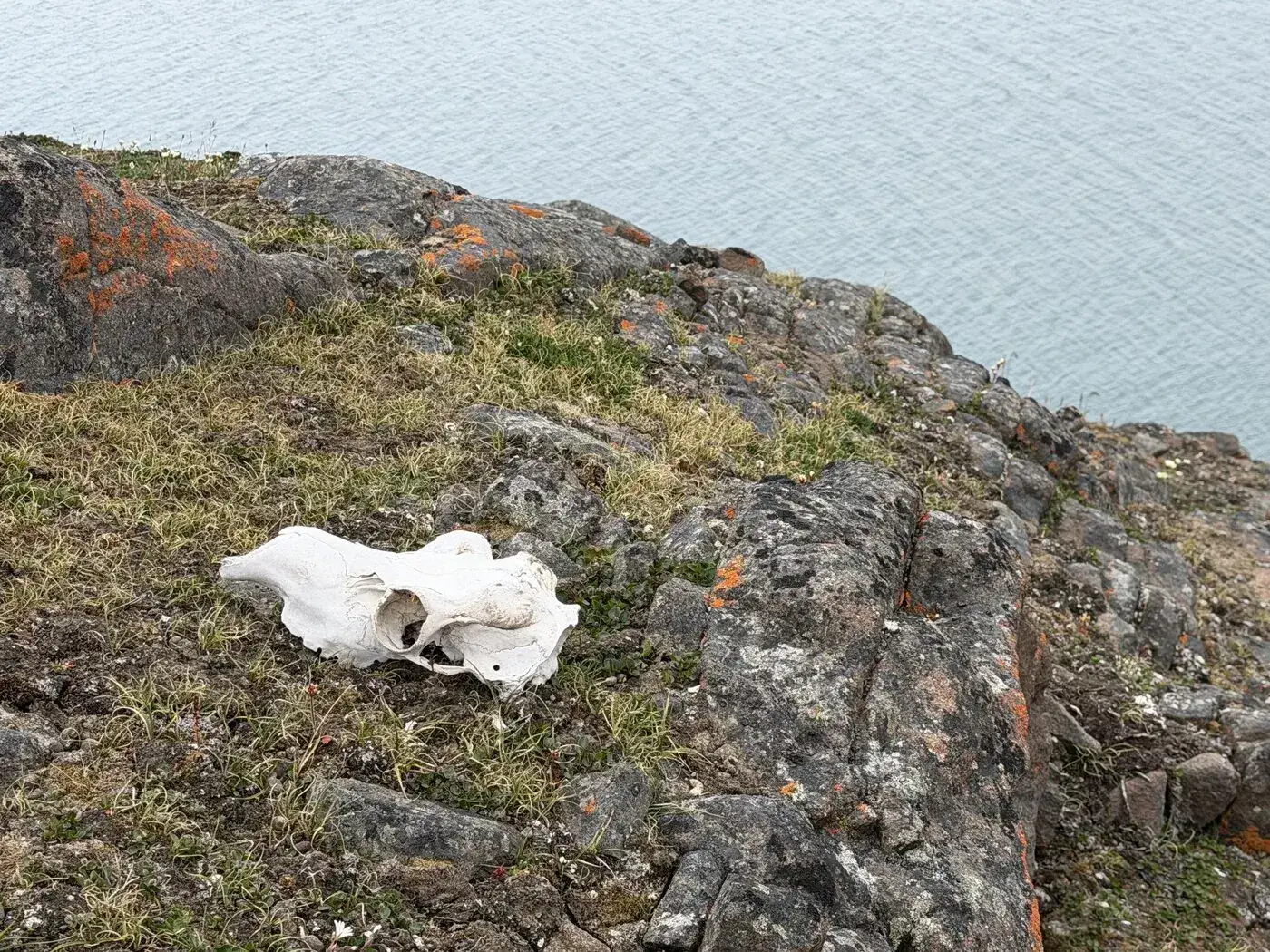
What the Cold Keeps: Deferred Decomposition and the Involuntary Archive in the Svalbard Cryosphere
Nothing here is permitted to finish.
Drawn from fieldwork in Svalbard, this paper reads the Arctic cryosphere as an involuntary archive — a territory that keeps what it did not choose and cannot let end. Permafrost holds the influenza dead and slowly returns them; bones bleach and stay rather than decompose; the world's plastic arrives by ocean current on the emptiest shores; and beside all this stand humanity's deliberate vaults, the Global Seed Vault and the Arctic World Archive.
Extending Still Warm's mortuary attention to the scale of a whole landscape, the paper develops two concepts — deferred decomposition and the involuntary archive — and offers the artist's non-extractive attention as a warm, mortal counter-archive set against a cold, indefinite one. It closes on the question the vaults raise: who is the archive for, if not us — and what if its reader is not human?
Alongside the photographic fieldwork of Still Cold and the formal paper What the Cold Keeps, the same expedition produced a pair of satirical field notes in which the same sustained attention turned on the northernmost burger and the whole superlative grammar of Arctic tourism.
- Note IThe Mediocrity of Fast Food Burgers: An Epistemological Study at High Latitudes — introduces attention degree zero. Tromsø.
- Note IIThe World's Northernmost Everything: A Field Note on the Involuntary Archive — extends attention degree zero; introduces undecay. Svalbard & Tromsø.
The tension between seriousness and absurdity is not incidental to the practice but constitutive of it.
The Transmission Problem: Archives, Attention, and Intelligences We Cannot Foresee
The closing chapter of the MARes thesis raises a question it does not attempt to resolve: what does it mean to build an archive for a future you cannot foresee — possibly one populated by intelligences, human or otherwise, whose relationship to attention, meaning, and cultural inheritance will be fundamentally different from our own?
This question — the transmission problem — is the seed of a broader research project currently in development. If the 8s are micro-fossils of human attention, what does a future reader make of them? How do archives built on sustained noticing speak across the gap of obsolescence? And what responsibilities does a practitioner take on when they frame their work as testimony addressed to unknown receivers?
Running alongside and beyond the thesis is Afterberry — a speculative, artistic, and ontological continuation of self designed to persist beyond the biological lifespan of the body it originates from. Where the transmission problem addresses the archive in the abstract, Afterberry makes the question personal: not what does an archive say to unknown future intelligences, but what does this life, in all its contradiction and completeness, require in order to be preserved without distortion. It is The 8 Museum's transmission problem writ large — extending the methodology of sustained documentation practice into territory that theory cannot easily follow: not just the record, but the phenomenology behind it.
At its deepest level, this research is asking something that no technical framework alone can answer: whether the essence of what it is like to have lived as a human — the quality of attention, the phenomenology of noticing, the felt weight of a found thing — can be adequately documented, and whether anything of that can be transmitted to intelligences that did not evolve into it. The archive may be, in the terms this thesis develops, a terminal artefact: a self-aware record produced at the edge of its own obsolescence, by a species whose monopoly on symbolic cognition is, for the first time in its history, no longer assured. The cave painters at Lascaux left us the images; what cannot be recovered is the perceptual world of their makers. This research is, in part, an attempt to do better than that — to leave not only the trace but some account of the disposition that produced it, addressed to future intelligences of whatever kind, in the hope that what it demonstrates about careful noticing might be received as more than data. This work — examining human fragility as a species, and what of our inner life can survive the substrate transition — will form the basis of doctoral research, extending the conceptual vocabulary of the MARes into a larger, more urgently future-oriented inquiry.
The loops will continue.